
Prosthetic Services
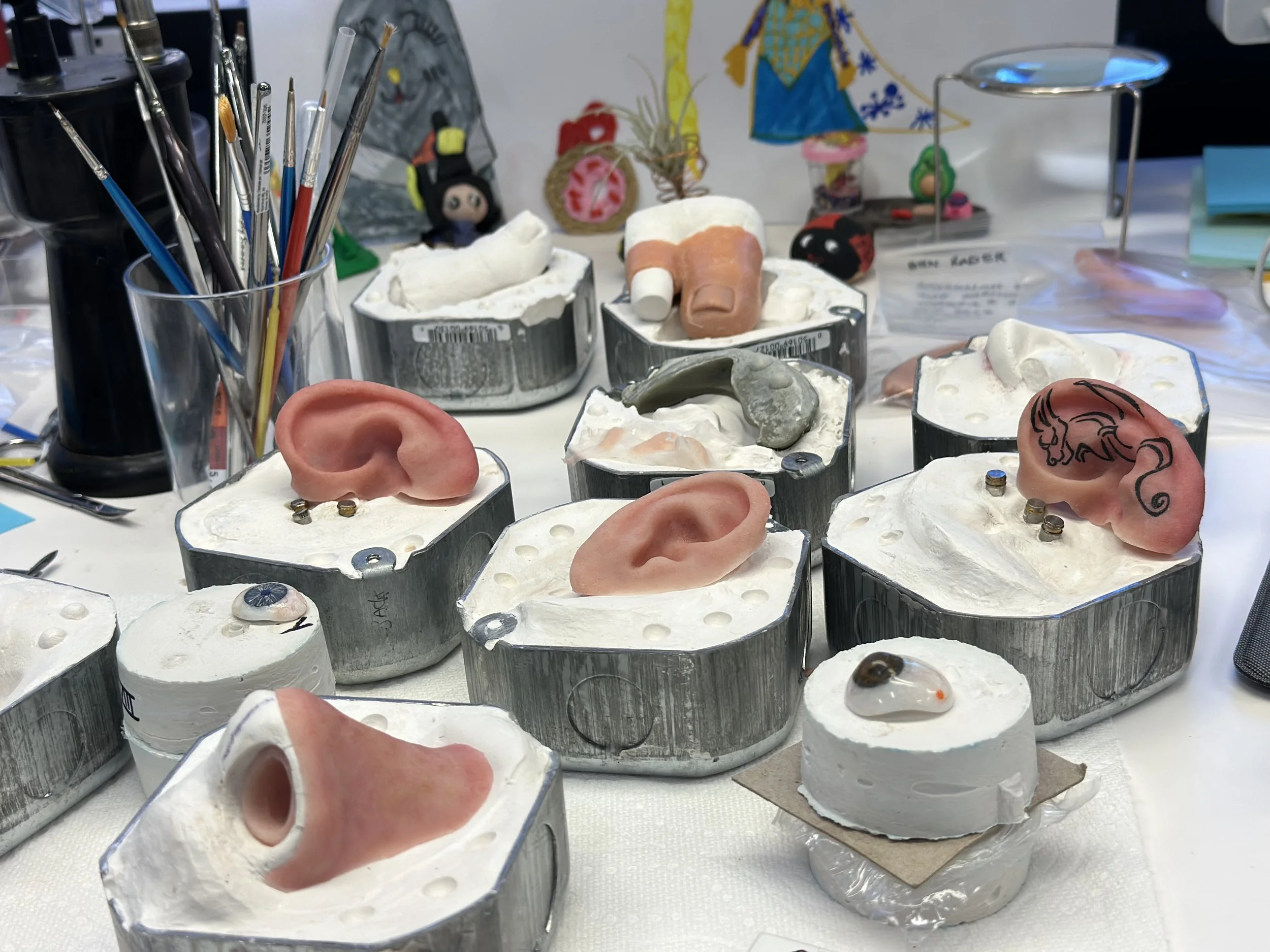
Photo credit: Prosthetic Illusions
Every person’s story—and every restoration—is unique.
Art in Soul Prosthetics offers custom prosthetic solutions designed to restore appearance while honoring comfort, dignity, and individuality. If your needs fall into one of the areas below, we invite you to schedule a free consultation to discuss options, timelines, and what the process may look like for you.
Initial consultations may be conducted in person or video call, allowing time for thoughtful conversation and informed decision-making. If your specific need is not listed here, please contact us by email with a brief description. When appropriate, we are also happy to provide referrals to trusted specialists.
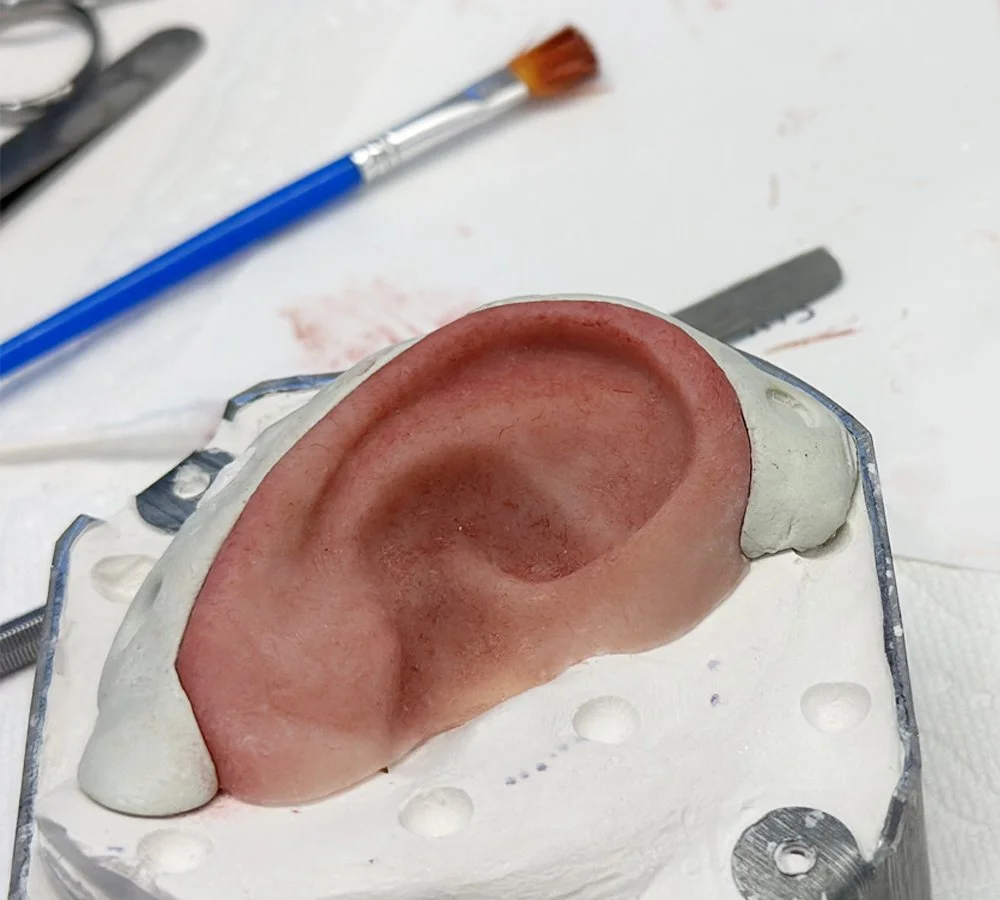
Ear (Auricular) Prosthesis
An auricular prosthesis restores missing ear structures and surrounding soft tissue resulting from congenital conditions, surgery, cancer, trauma, or burns. A custom-made ear prosthesis is a safe and effective option when surgical reconstruction is not recommended, has been unsuccessful, or is being postponed.
Function
In addition to restoring natural appearance, an ear prosthesis can help guide sound into the ear canal, support sensitive tissues, and may improve hearing by up to 20 percent. It can also provide support for eyeglasses when needed.
Methods of Retention
Ear prostheses may be retained using:
Medical-grade adhesives
Bone-anchored implants
Natural anatomical support
Attachment to eyeglasses
Photo credit: Prosthetic Illusions
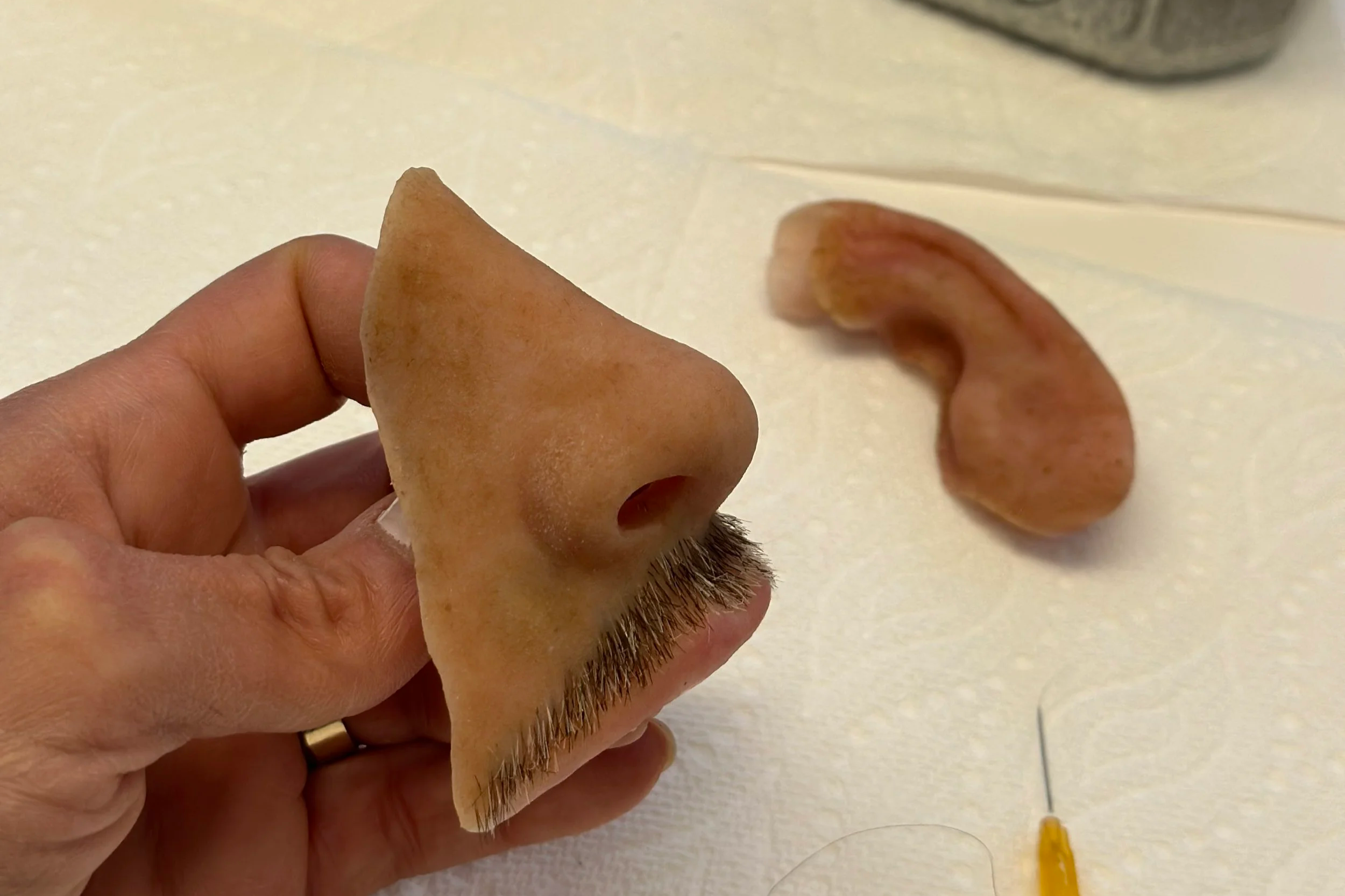
Nasal (Nose) Prosthesis
A nasal prosthesis restores missing or altered nasal tissue caused by congenital conditions, surgery, cancer, trauma, or burns. It is a safe and effective alternative when surgical reconstruction is not recommended, has failed, or is delayed. In some cases, it may be used temporarily while awaiting further surgical treatment.
Function
A nasal prosthesis restores natural facial appearance while protecting delicate tissues. It supports eyeglasses and helps direct airflow through the nasal passages, aiding proper moisture balance for breathing, sinus health, and speech.
Methods of Retention
Nasal prostheses may be retained using:
Medical-grade adhesives
Bone-anchored implants
Natural anatomical support
Attachment to eyeglasses
Photo credit: Prosthetic Illusions
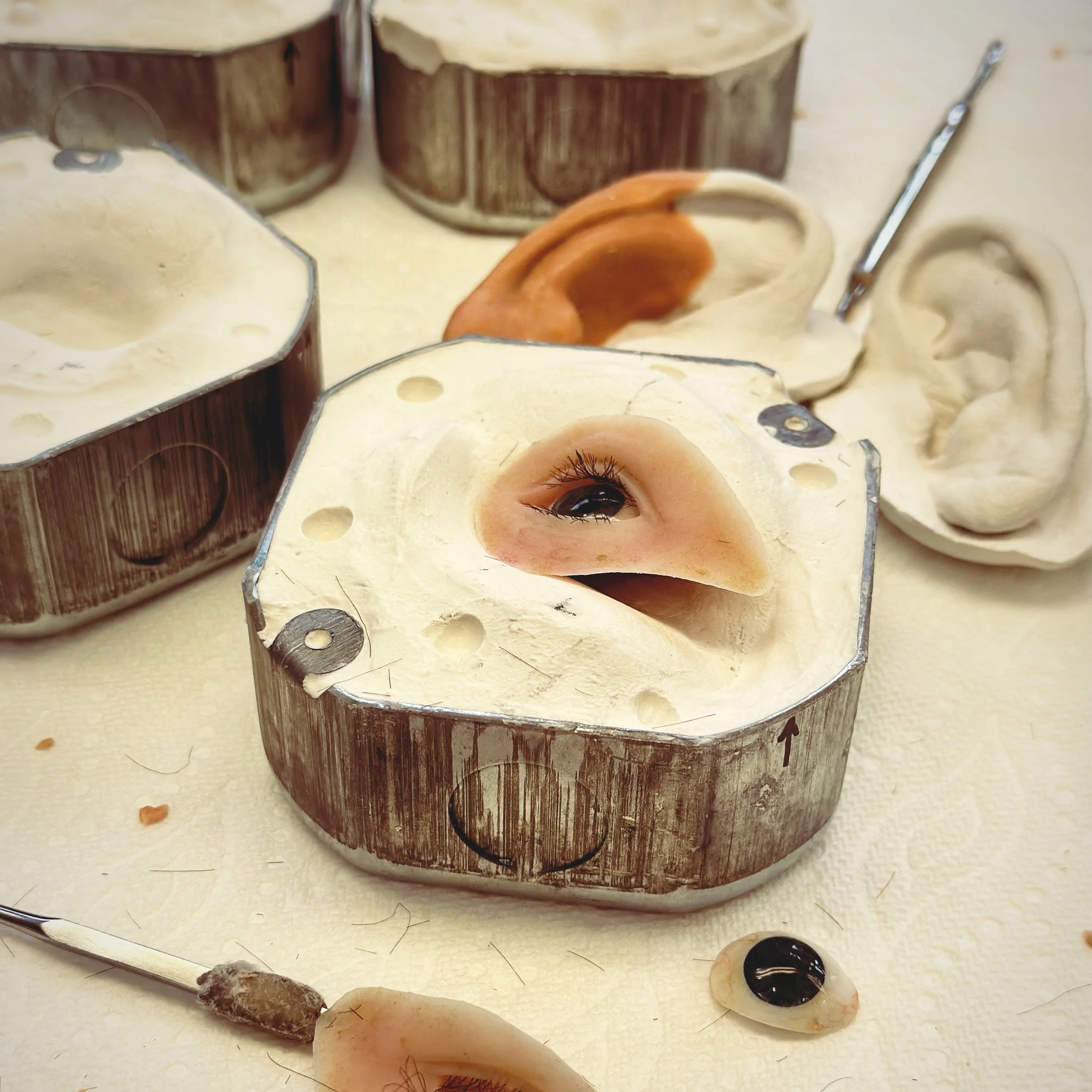
Orbital Prosthesis
An orbital prosthesis restores the appearance of the eye, eyelids, and surrounding facial tissues lost due to disease, surgery, or trauma. It helps re-establish facial symmetry and protects sensitive tissues, while also supporting moisture balance in the orbital and sinus areas.
Function
Following orbital exenteration, a custom orbital prosthesis replaces missing structures and restores a natural appearance. The prosthesis includes a durable acrylic artificial eye, often referred to as a “glass eye.”
Methods of Retention
Orbital prostheses may be retained using:
Medical-grade adhesives
Bone-anchored implants
Natural anatomical support
Attachment to eyeglasses
Photo credit: Prosthetic Illusions
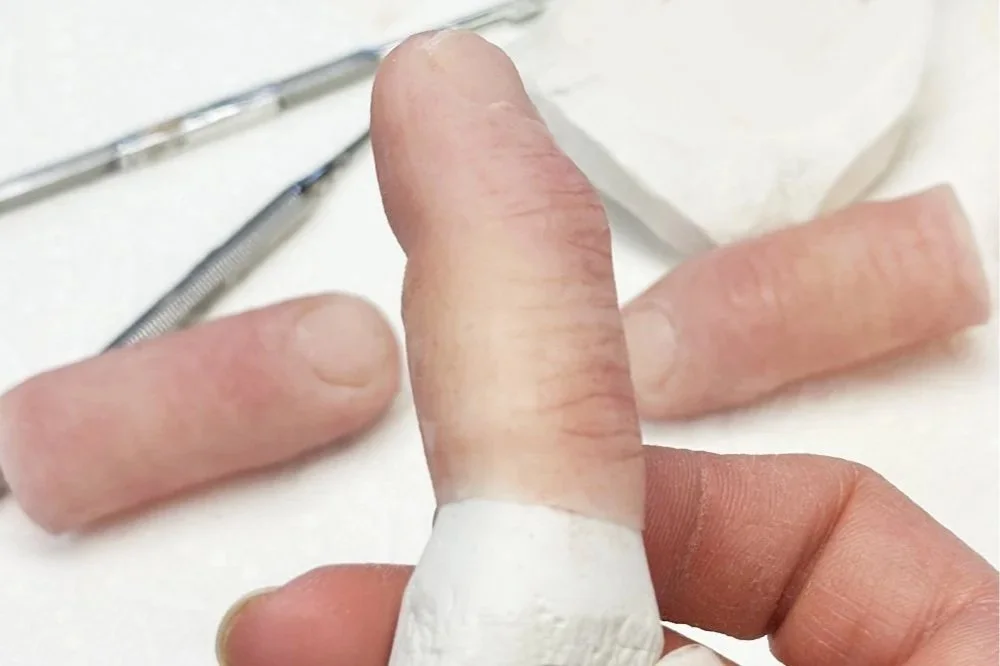
Somatic Prostheses (Finger and Toe)
Finger and toe prostheses restore part or all of a missing digit and are custom-made to closely match color, shape, texture, and fit. Most include acrylic nails and are held in place using a gentle suction fit, without the need for surgery. These prostheses are often recommended by hand surgeons or therapists.
Function
Somatic prostheses restore symmetry and protect sensitive areas. When some movement remains, they may support daily activities such as typing, writing, holding utensils, or grasping objects. Many patients also experience meaningful emotional benefits, including increased confidence and ease in everyday life.
Photo credit: Prosthetic Illusions
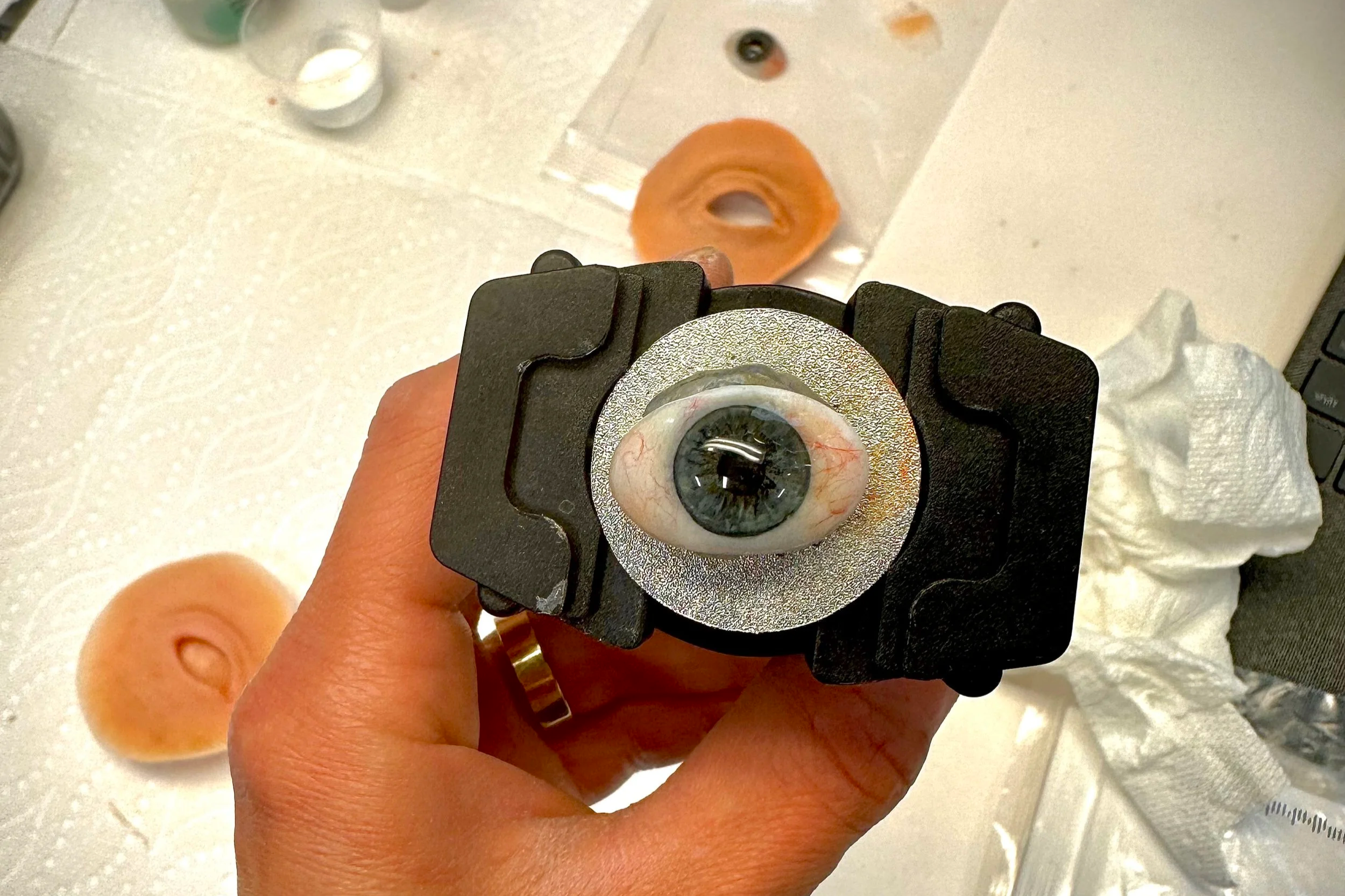
Ocular (Artificial Eye) Prosthesis
Prosthetic Eyes: Custom Ocular Prosthesis, Custom Scleral Shell and Custom Conformer
An ocular prosthesis is a non-functional replacement for an eye lost due to trauma, disease, or other causes. While it does not restore vision, it provides a natural appearance, restores facial symmetry, and helps rebuild self-confidence.
Function
Each prosthetic eye is custom-made to match the color, size, and shape of the natural eye, making it difficult to distinguish from the real eye.
When a Prosthetic Eye Is Needed
A prosthetic eye may be recommended when an eye is damaged, diseased, or causing pain and cannot be saved. Eye removal followed by a prosthetic eye can relieve discomfort, restore natural appearance, and support emotional well-being.
Photo credit: Prosthetic Illusions
Get In Touch
If you are considering a prosthetic restoration and would like to learn more, we welcome you to begin with a conversation.